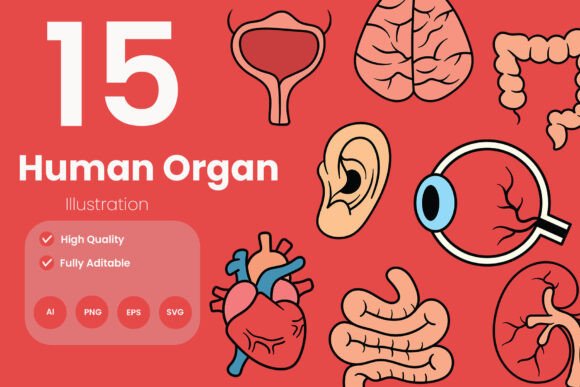
Human Organ Illustration Pack: A Powerful Design Asset for Medical and Educational Content
As an experienced blog designer and digital publisher, I’m always on the lookout for graphic design assets that can elevate content visuals without compromising clarity or professionalism. The Human Organ Illustration Pack caught my eye for its detailed yet approachable style—perfect for a range of editorial and web publishing needs. This pack, available in AI, PNG, SVG, and EPS formats, offers high-quality vector illustrations that support medical, educational, and scientific projects with precision and visual flair.
First Impressions: Clean, Modern, and Educational
The first thing I noticed about the Human Organ Illustration Pack is its clean, modern aesthetic. Unlike some more stylized illustration sets, this one feels grounded in real-world application. The level of detail is impressive, especially considering the versatility it brings to different platforms and screen sizes. It’s not overly decorative, which makes it ideal for professional niches like health education, anatomy tutorials, or even affiliate marketing around wellness products.
These illustrations create an editorial mood that's both informative and inviting. They support a wide array of content niches, particularly those focused on education, science, and health. The tone leans toward the serious but remains accessible, making it suitable for lifestyle-focused blogs that want to maintain a professional edge. It doesn’t feel playful or feminine, which might be a plus or a minus depending on your brand voice—but for most content creators in STEM or health fields, this is exactly what they need.
Real Publishing Use Cases for Human Organ Illustrations
When integrating new graphics into a publishing workflow, I look for assets that can serve multiple purposes. The Human Organ Illustration Pack fits well into several key areas:
- Blog Featured Images: These illustrations work beautifully as full-width headers or article thumbnails, especially when paired with bold typography about health topics, diet plans, or fitness routines.
- Pinterest Graphics: The flat-style vector illustrations are perfect for creating eye-catching pins that drive traffic back to articles or product pages related to wellness, biology, or medical science.
- Article Headers and Section Breaks: Used as dividers between sections of a long-form post, these illustrations help guide readers through complex information while maintaining a cohesive visual identity.
- Newsletter Banners: Incorporating organ visuals into email headers adds context and relevance for newsletters covering health updates, research summaries, or educational content.
- Digital Guides and Lead Magnets: When designing downloadable resources such as anatomy cheat sheets or beginner’s guides to nutrition, these illustrations provide a strong visual anchor that builds trust and engagement.
- Canva Templates: As a designer who frequently uses Canva for quick layouts, I appreciate how easily these illustrations slot into templates, giving them an instant upgrade in terms of both clarity and polish.
- Media Kits and Brand Assets: For niche websites focusing on health or education, including these illustrations in media kits or promotional materials reinforces brand identity and subject matter expertise.
Boosting Content Performance with Visual Clarity
One of the biggest challenges in content publishing is ensuring that visuals don’t distract from the message. The Human Organ Illustration Pack does this well by offering clear, scalable designs that enhance rather than overshadow text. In editorial design, this means stronger first impressions, clearer visual hierarchy, and better click-through potential. Readers are more likely to engage with a post that features relevant, polished imagery right from the start.
For website owners and bloggers, using these illustrations consistently across content types—from blog posts to social media—can lead to improved brand identity. The same applies to digital marketers crafting landing pages or ad creatives for health-related services. Even in affiliate marketing, where conversion often hinges on credibility, these illustrations add a layer of professionalism that helps build reader trust.
Where These Illustrations Shine in Web Design
Here are the top spots where I’ve found the Human Organ Illustration Pack to deliver the most impact:
- Hero Images: Pair an organ illustration with a strong headline about health topics to immediately establish focus and relevance.
- Category Thumbnails: If you have a section dedicated to “Nutrition,” “Fitness,” or “Medical Science,” these illustrations can make category navigation more intuitive and visually engaging.
- Content Upgrades: Add these to downloadable worksheets or PDFs to increase perceived value and encourage sign-ups.
- Lead Magnet Covers: Whether it’s an eBook or a printable checklist, using a human organ illustration as the cover image can signal depth and authority.
- Social Media Previews: These illustrations perform well as Instagram stories, Facebook banners, or YouTube thumbnail accents, especially when explaining processes or systems in layman’s terms.
Use Carefully in Certain Contexts
While the Human Organ Illustration Pack is incredibly versatile, there are situations where it may not be the best fit. Avoid using it in:
- Small Mobile Thumbnails: The intricate details may get lost at smaller resolutions, reducing their effectiveness as click bait.
- Text-Heavy Blog Images: Overloading a graphic with too much copy can clash with the illustration’s visual complexity.
- Low-Contrast Backgrounds: To ensure readability, always test these illustrations against your site’s color scheme before finalizing use.
- Busy Layouts: If your page design is already packed with elements, consider simplifying to avoid competing with the illustration for attention.
- Corporate or Minimalist Sites: While great for educational or lifestyle sites, these illustrations may feel out of place in very formal or minimalist branding environments.
Practical Publisher Tips for Using Human Organ Illustrations
Before implementing these illustrations into your publishing workflow, here are some key steps to follow:
- Test Across Devices: Always preview the illustrations on desktop and mobile screens to ensure they scale properly and remain legible.
- Thumbnail Test: Crop and resize the image to see how it looks as a Pinterest pin or blog post thumbnail. Adjust colors or contrast if needed.
- Mockup in Real Layouts: Place the illustration into your actual blog or website template to check alignment, spacing, and overall integration.
- Combine with Headline Text: Try overlaying a short, punchy headline (e.g., “How Your Lungs Work”) to see how it complements the visual.
- Check Contrast and Readability: Ensure the illustration doesn’t overpower text elements or make them harder to read.
- Try in Black and White: Some illustrations retain their impact in grayscale, which is useful for printables or black-and-white printing scenarios.
- Font Pairing Experiment: Test the illustration beside different fonts—serif, sans serif, script, handwritten, and display—to find the most harmonious combinations.
- Optimize File Size: Since these are high-quality vectors, compress images appropriately for web performance without sacrificing quality.
- Confirm Commercial License: Before using on monetized websites, affiliate pages, or paid digital products, verify that you have the correct commercial license to protect yourself legally.
Why Choose This Illustration Pack?
What sets the Human Organ Illustration Pack apart is its ability to balance artistic quality with editorial utility. It’s not just another set of clipart; it’s a thoughtful collection designed to communicate complex ideas in a simple, elegant way. For creative entrepreneurs building a portfolio in the health or education space, these illustrations offer a ready-made toolkit for producing design assets that look custom-built.
In content marketing, visuals play a critical role in capturing attention and conveying meaning quickly. These illustrations help break down technical information into digestible, shareable content—ideal for both SEO-driven articles and social media campaigns.
Final Thoughts for Digital Publishers
Overall, the Human Organ Illustration Pack is a valuable addition to any designer’s library, especially those working in medical, educational, or scientific niches. Its high-quality vector format ensures scalability and adaptability across platforms, from website headers to printable design downloads. And with file options like SVG and EPS, you can edit and customize the illustrations to match your brand’s specific needs.
If you're looking to enhance your blog graphics, improve editorial layouts, or simply add a touch of sophistication to your digital product visuals, this illustration pack is worth considering. Just remember to apply it strategically, keeping your audience and platform in mind to maximize its impact.
Whether you’re preparing content for a creative marketplace, developing a digital guide, or optimizing your social media graphics, the right design asset can make all the difference. The Human Organ Illustration Pack has proven itself as a reliable and effective choice in many of my recent projects—and I believe it will do the same for yours.